




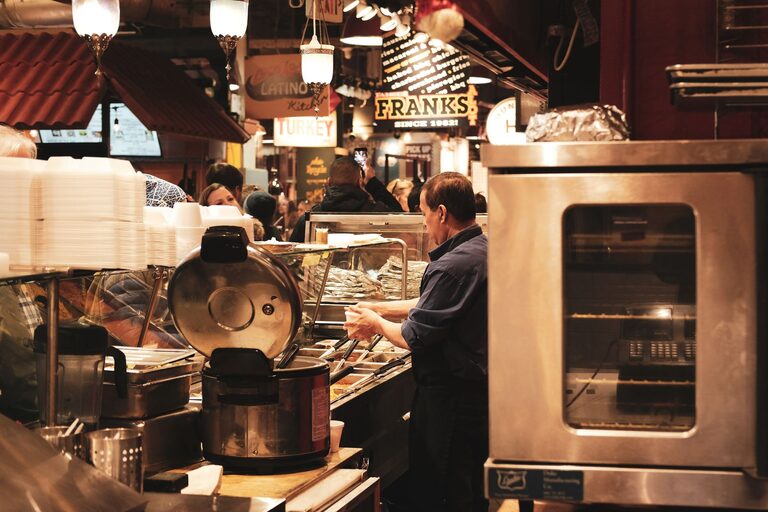
Independent food halls are changing how people discover restaurants and how chefs build their businesses. Instead of opening a traditional standalone restaurant, an emerging chef can begin with a smaller counter, shared kitchen, or rotating stall inside a food hall.
This model offers a practical middle ground. Chefs can introduce their food to the public without taking on every cost and responsibility associated with a full restaurant. Customers, meanwhile, get the chance to try different cuisines and concepts in one lively setting.
As food halls continue to grow, they are becoming more than collections of vendors. Many now serve as launchpads for new culinary talent, giving chefs space to experiment, connect with customers, and develop a loyal following.
A Lower Barrier to Entry
Opening a traditional restaurant often requires a large investment in equipment, rent, staffing, design, permits, and marketing. These costs can be especially challenging for chefs who have strong ideas but limited access to capital.
Food halls can reduce some of those early obstacles. Many provide shared seating, restrooms, utilities, cleaning services, and other common amenities. A chef may only need to focus on the food counter, kitchen setup, supplies, and daily operations.
This does not make running a food business simple. Vendors still need to manage food costs, labor, permits, customer service, and quality control. However, the shared structure can make the first step more manageable.
For an emerging chef, the benefits may include:
– A smaller footprint than a full restaurant
– Shared customer areas and building services
– Lower design and maintenance responsibilities
– Access to an established location
– A chance to test a menu before expanding
The arrangement can also make it easier to start with a focused menu. Rather than offering dozens of dishes, a chef can build a concept around a few well-executed items.
A Place to Test New Ideas
One of the most valuable features of an independent food hall is its flexibility. Chefs can often adjust menus, add seasonal dishes, or introduce special events more easily than they might in a larger restaurant.
This creates room for experimentation. A chef may test a regional specialty, a new cooking technique, or a menu inspired by family traditions. Customer response can provide useful information about pricing, portion sizes, flavors, and presentation.
For example, a chef might begin with a small selection of sandwiches and sides. After observing which items attract the most attention, the menu can evolve. Popular dishes can become signature items, while less successful choices can be replaced without requiring a complete business redesign.
This feedback loop is valuable because it combines creativity with real-world information. Instead of relying only on assumptions, chefs can learn directly from customers and daily sales patterns.
Menus Can Evolve With the Audience
Food hall customers often enjoy variety and novelty. This gives vendors opportunities to offer limited-time dishes, tasting portions, or rotating menus.
Seasonal changes can also help keep a concept fresh. A vendor might introduce lighter dishes during warmer months and heartier options during cooler seasons. Regular customers have a reason to return, while new visitors have something different to discover.
Direct Connections With Customers
A food hall counter places chefs and their teams close to the people they serve. This direct connection can be one of the most useful parts of the experience.
Customers can ask questions, share feedback, and learn more about the food. Chefs can observe which dishes create excitement and which parts of the service need improvement. These conversations can help shape the identity of a young brand.
In a traditional restaurant, customers may interact mostly with servers. In a food hall, the distance between the kitchen and the dining area is often shorter. That can make the experience feel more personal and transparent.
These connections may also help chefs build a community around their work. Customers who enjoy a vendor’s food may follow the business online, attend pop-up events, recommend it to friends, or visit when the chef expands to a new location.
Shared Foot Traffic and Cross-Promotion
Independent food halls bring multiple food businesses together under one roof. Each vendor has its own menu and identity, but the group can attract more visitors than a single new business might draw on its own.
A customer may arrive to try one vendor and discover two or three others during the same visit. Families and groups benefit from having several options in one place, especially when people have different tastes or dietary preferences.
Vendors can also support one another through informal cross-promotion. A chef might recommend another stall for dessert, while a neighboring business suggests a particular lunch special. Events, social media posts, and shared promotions can give smaller brands greater visibility.
This shared environment can be especially helpful for chefs who are still learning how to market their businesses. They gain exposure through the food hall’s location, events, website, and customer base.
Building a Distinct Brand
A food hall can provide a first public home for a chef’s concept. The space may be smaller than a full restaurant, but it can still communicate a clear identity through the menu, signage, packaging, uniforms, and service style.
A strong brand helps customers remember what makes a vendor different. That difference could be a specific regional cuisine, a creative approach to familiar dishes, a commitment to seasonal ingredients, or a distinctive visual style.
Chefs can use this stage to answer important questions:
– What dishes best represent the concept?
– Who is the core customer?
– What price range feels appropriate?
– What kind of atmosphere fits the brand?
– Which parts of the experience encourage repeat visits?
The answers can guide future decisions, including whether to open a restaurant, launch a catering service, sell packaged products, or continue operating within a food hall.
Opportunities for Collaboration
Food halls can also encourage collaboration among chefs, makers, and local organizations. Vendors may work together on special menus, shared events, cooking demonstrations, or community gatherings.
These partnerships can introduce chefs to new audiences and help them develop skills beyond the kitchen. A chef may learn more about event planning, wholesale production, social media, or customer engagement through these shared projects.
Some food halls also host markets featuring local producers and small businesses. These events create additional opportunities for chefs to meet suppliers, discover new ingredients, and connect with people who are interested in local food.
Challenges to Consider
Although food halls offer meaningful advantages, they are not the right fit for every chef or concept. Vendors must understand the terms of their agreements, including rent, service fees, operating hours, and any rules about equipment or menu changes.
The shared setting can also create challenges. Noise, limited storage, busy peak periods, and competition from nearby vendors may affect daily operations. A food hall’s overall reputation and management style can influence every business inside it.
Before joining a food hall, chefs should carefully evaluate:
– The location and regular customer traffic
– The kitchen equipment and storage space
– The total occupancy and service costs
– The expected hours of operation
– The food hall’s marketing and event plans
– The flexibility to change the menu
– The agreement’s length and renewal terms
A clear plan can help a chef make the most of the opportunity while avoiding surprises.
A Practical First Step
For many emerging chefs, an independent food hall offers a useful way to move from idea to operation. It provides a real setting for serving customers, refining a menu, and learning the everyday demands of food service.
The model does not replace the ambition of opening a traditional restaurant. Instead, it can serve as a practical first chapter. Chefs can grow at a manageable pace, build recognition, and decide what direction makes sense for the future.
As customers continue to seek variety, convenience, and personal connections with food makers, independent food halls are likely to remain important incubators for culinary talent. They give chefs room to begin, experiment, and develop—one dish and one customer at a time.